


“Gunner, SABOT, tank!”
The first time I got to work side by side with American armor was a very frigid brigade-level exercise. Watching and listening over comms as the tank detachment maneuvering with us danced their dance with the aggressor tanks from the cavalry squadron playing the role of REDFOR. There was one tank commander whom I distinctly remember, a staff sergeant, who clearly loved his job and being a tanker more than anything else on the planet. Sometimes you can tell just how much someone loves their soldiering by how they speak on the radio, how they communicate with those to their left and right, and how they choose not to communicate with higher. And he was good at it. His crew was good at it.
The exercise that day taught me two things: it’s a helluva thing to get to maneuver side by side with armor, to dance the dance with the big guns and waltz between Bradley IFVs and Abrams MBTs. And also it really sucks to have to maneuver without armor in that same threat environment. Tanks provide firepower, speed, and security to commanders and their formations in ways others cannot; even when the skies open up with FPV drones and the enemy stockpiles anti-tank missiles.
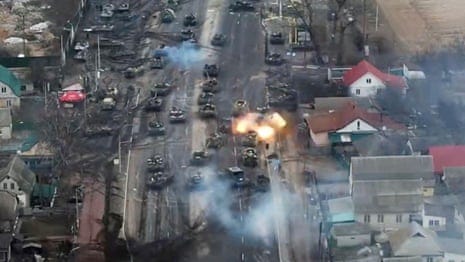
I’ve written before about the symbiotic relationship between armor and infantry in combined arms maneuver, but now I want to talk about why armor still matters, and how we can make it better for tomorrow’s fight. I am exhausted by the commentary, including from former senior American commanders, about how the tank is irrelevant. It’s a cheap talking point with little evidence. Not only is it not irrelevant, you’re going to want it for the next fight. So long as you employ it correctly.
To understand where I’m going, we must first turn back the clock to the 1980s: i.e. the last time American armored forces faced such a short expected lifespan against a peer threat.
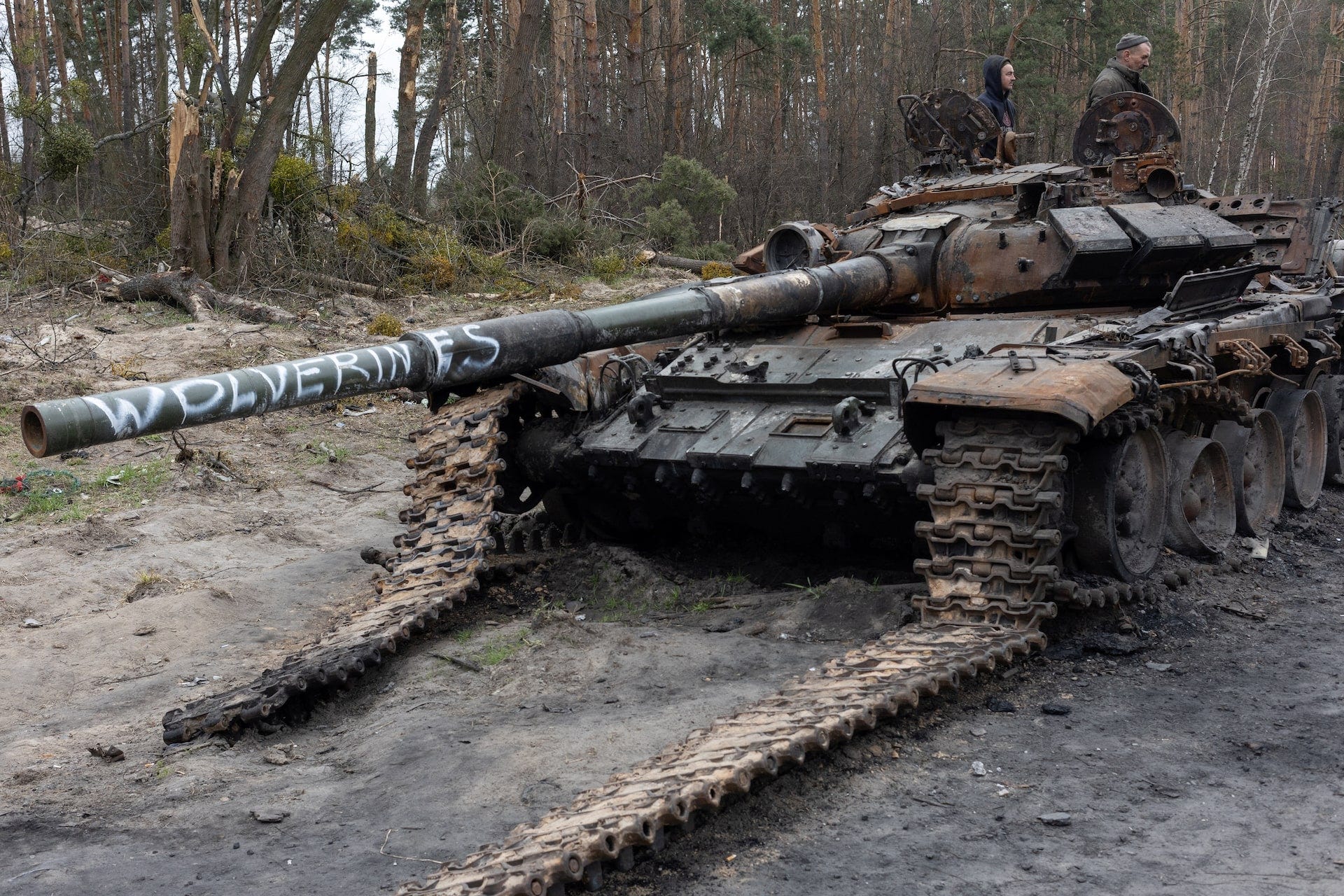
Run it Back
The thing about American armored forces in Europe in the 1980s was that no one expected them to beat the Soviets by themselves. They were meant to buy time long enough, against a superior Soviet armored force, for the rest of NATO to mobilize and join the fight or until both sides reached exhaustion and/or went nuclear. As time trudges onward, it’s easy for the history of the Cold War to get lost in nuclear weapons, espionage, and the now-seemingly inevitable Western victory. And yet for the American Army, it very much planned to go toe to toe with a force it did not anticipate to easily best with its back to the Atlantic wall. These days, most commentary will include a simple reference to the “Fulda Gap,” a small, strategic lowland in central Germany that was one of two critical routes for any rapid Soviet passage into the West as it drove towards the Atlantic (the other being the much more open but longer North German plains).


The modern day equivalent for such a geographically hostile, confined space that dictated countless wargames, weapons development, and paranoia would be the Taiwan Strait in the context of a wider US-China conflict. The A-10 aircraft, Bradley Infantry Fighting Vehicle (IFV), Apache attack helicopter, and M1 Abrams main battle tank were all designed with at least this sliver of land of Central Europe in mind. Yes, the symbols of the American Army for decades to come were all forged for a mechanized war to end all wars that analysts measured in mere weeks. The expectation was that armored forces would slug it out, with heavy casualties on both sides, as each tried to rapidly punch through the other’s defenses and cut them off from their homelands and supply chains. The expectation followed then that any engagement over say, a small corridor in otherwise hostile, mountainous terrain, would see such heavy activity that the forces deployed there wouldn’t last for much more than days at a time. In other words, the last time we stared down a peer threat, we understood that armor was neither invincible nor very survivable in the long run. Survivability, like attritability, is in the eye of the commander, after all. It’s all about what it buys you in your engagement, battle, and campaign in the aggregate. The modern mythos of the invincible main battle tank only began after the Fall of the Berlin Wall.
Mythmaking
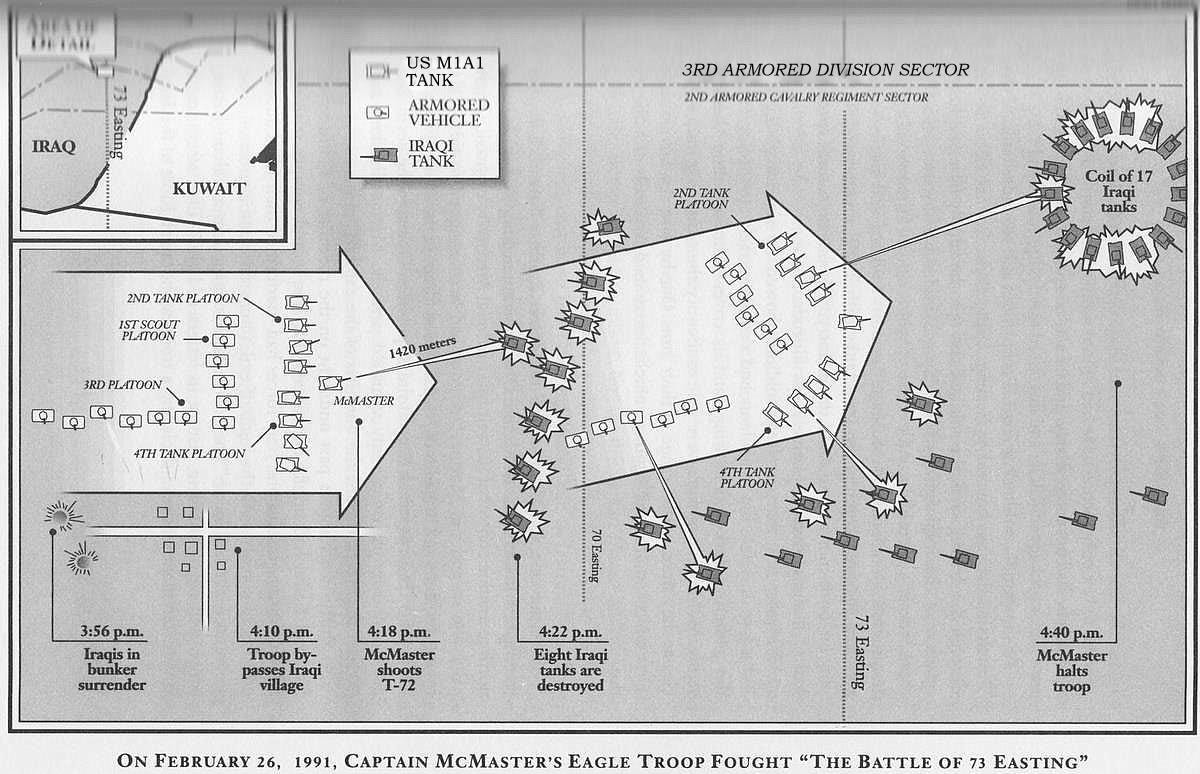
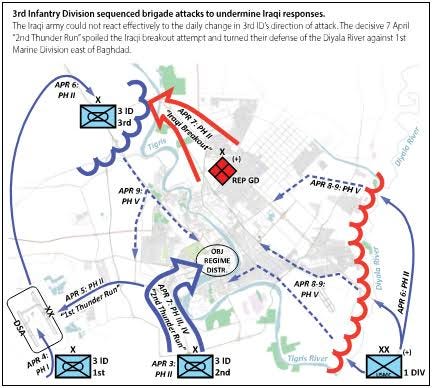
The Battle of 73 Easting and Thunder Run: any discussion about modern American mechanized warfare must begin in the open stretch of earth between Baghdad and the Kuwaiti border, separated by a dozen years. (And they’ve inspired a number of Triple A title video game missions.)
In February 1991, elements of the American 2nd Armored Cavalry Regiment (2ACR) annihilated two Iraqi armored brigades composed of Soviet tanks and APCs. In one particular engagement led by then-Captain HR McMaster (yes, that one), McMaster’s E Troop engaged and destroy more than two dozen Iraqi tanks, about a dozen armored personnel carriers, and additional equipment and vehicles, in all of 23 minutes. I could go on and on about the battle, but I think you get the point. In their first major engagement since Korea, American armor faced off against Soviet equipment in quantity and a numerically superior Iraqi armored force (which before we smashed it to pieces was taken quite seriously), validating the combat tactics and technologies developed in the decade previous to fight Soviet armor. All of this less than a year after the fall of the Berlin Wall and less than a year before the USSR dissolved. In the entire battle, the Iraqis lost 160 tanks and 180 APCs…the Americans lost one M3 Bradley to enemy fire.
Fast forward 12 years to the next Iraq War, where Coalition forces led by 3rd Infantry Division’s mechanized forces captured Baghdad just three weeks into the war, with two “thunder run” armored raids seizing major sections of the city with minimal casualties. (Never mind that the Iraqi Army never recovered from the thrashing the Coalition gave it in 1991.) The initial invasion of Iraq was the last time US forces had to worry about armor-on-armor engagements. But it wasn’t the last time we had to worry about losing a tank.
Threats to American Armor Proliferate
Armor has its place in a counter-insurgency campaign, providing cover and firepower to infantry engaged in close-in urban warfare. But it’s not its home. Unfortunately, armored forces are juicy, if hard, targets for insurgents seeking to maximize visible pain for occupying forces. Tanks are designed to fight other tanks and absorb a certain amount of hate from other direct and indirect fire systems like artillery and RPGs so they can keep on fighting. You can’t protect everything, that’s just a fact of weapons design: the iron triangle of mobility, firepower, and protection and the tradeoffs therein. Every tank has its soft spots and nothing is impervious. Advanced night vision might help you against Soviet armor with less capable sensors but less so against daisy-chained IEDs designed for mobility kills and EFPs that punch in the soft underbelly. All in all, the US lost a little under two dozen Abrams to enemy action and a few dozen more were severely damaged over the course of the Global War on Terror (Iraq, really).
The IEDs Fly Now
Aside from sensor proliferation, advancements in anti-tank launchers, and large-scale artillery employment, the other problem for tanks in Ukraine is that the IEDs fly now. Some may take this to mean I’m simplifying the advancements in drone technology that makes the threat possible, but I’m not. Consider what I wrote above, the advantage of the IED was the ability to overcome traditional tank design and strike at weak points. The flying IED, the drone, whether it be a one-way attack UAS or bomber drone, strikes at open tank hatches and the weaker top armor of Cold War era tanks. Striking armor from the air is hardly new, after all aircraft like the SU-25 and A-10 were explicitly designed to strike at enemy armor on the fields of Europe. But now you don’t have a pilot and much better sensors for far cheaper. And so the tank must be redesigned for this new threat profile, just as the tanks of the 70s and 80s adapted for improvements in armor, anti-tank munitions, optics, and munitions.
The most reliable open source numbers I can find on battlefield losses have 4400 Russian and 1400 Ukrainian tanks destroyed as of early 2026. Causes of death: drones, anti-tank launchers, mines, artillery, other tanks, and so on. Of course, the drones are the ones with the built-in highlight reels via EO/IR cameras. You don’t get that with an RPG, or anti-tank mine. This isn’t to downplay the power of UAS-based warheads either, I’m quite confident they can find ways to punch through Cold War-era armor from the top in a small package. You know why? Because the Javelin anti-tank missile was designed with a top-attack function for that very reason and we built that thing in the 90s. So yes, drones, those pesky flying IEDs, are a real threat to modern armor. But that’s a far cry from calling armor obsolete.
Tanks. What are they good for?
Like I said at the beginning, tanks provide firepower, speed, and security to a commander and his formation. But if they’re obsolete, surely a commander must no longer need those things or there is something(s) that adequately provides those needs in place of heavy armor? Let’s review.
This is war, so yeah commanders still need to overwhelming direct fire superiority, they still need to maintain tempo and speed to keep the enemy off balance, and infantry formations still need the security tanks provide either as the formation heavy or as a screening/protection force.
Are there things that sufficiently replicate what the tank provides?
Well, plenty of manned and unmanned systems can bring the heat. Are there other systems capable of bringing the rate of fire and force of a 120mm range cannon with top of the line sensors. Sure, maybe you can rebuild it in the aggregate across a number of systems but none in a single package. And rebuilding in the aggregate means a more complex supply chain, additional force packages, a more complicated force structure, etc. Do all of our major peer threats around the world still maintain significant armor capabilities? Yes? OK so we still need tanks to fight other tanks and keep the firepower edge in the combined arms fight so we can seize and hold ground.
What about security and speed?
Well, helicopters and UAS are capable of screening with a greater height of eye and greater speeds than armor. But weather and sortie rate are significant limiting factors for rotary aircraft. Drones aren’t much better in bad weather and have a far more limited range than helicopters with far less firepower. But you can deploy a lot of them and use them as semi-passive sensors. Then there’s that pesky anti-air system problem. What about Bradleys/IFVs/APCs? Sure, they can also act as screening and security forces, but their armor and punch is a lot lighter than an MBT and when you make contact with the enemy in a small formation you want to be able to punch hard and run. But not all reconnaissance can or should be done from a massive tank. Which is why you need a mix of both. There’s that combined arms element again, let’s save that for later.
Then there’s that other lesson from the Cold War which has come back in force: electronic warfare.
War is hard even when your comms are working perfectly. And your comms are never working perfectly. The commander’s picture of the battlefield, even with a sensor saturated environment, is never perfect. Those on the ground must use mission command and their best judgment to make the right decisions. The Fog of War comes for everyone. Electronic warfare, the jamming and hunting of signals, is another skill and lesson we lost when the Wall fell. Sure, we used it to great effect hunting cell phones and HVTs in the GWOT, but that is a far cry from fighting when you’re the one being hunted and jammed. Fighting through the noise jamming up your radio and digital networks is a pain when trying to coordinate armored forces over large swaths of land in hostile territory. But it’s also a major pain for drone operators. UAS run on satellite based or line of sight (think radio) based communications. Most in Ukraine (and around the world) are not the autonomous kind that can operate in the blind smartly by themselves. And even if you aren’t jammed, your signal can be hunted and the enemy can drop their own UAS or artillery on your position. Sure, you have fiber optic cables but those are getting expensive and severely limit the range at which operators can safely fly their UAS. Everything in war is a tradeoff. There’s that iron triangle again.
So, what is obsolete?
Obsolescence isn’t really the right question. The tank isn’t obsolete and the UAS isn’t perfect, that much we’ve established. But the character of warfare changes while its nature remains near constant. So what characteristics of the tank, of the armored formation, of our tactics, must we change in order to adapt to a new threat AND the new capability that is the proliferated small UAS? Jack Watling started this discussion in his wonderful book: The Arms of the Future. If the heaviest (and I mean heavy) of tanks can still get taken our by a UAS…perhaps continuing to max armor isn’t the right path. Do we need additional firepower onboard? Yes. The tank already comes with a lot of firepower, but perhaps we can mix in some more electronic warfare systems for hunting and killing UAS? Maybe we can add an auto-defense turret oriented towards the sky. If we make the tank lighter, we can put more power and space towards those systems instead of moving and over armoring the thing. And if the tank is lighter, maybe we can make it faster so it’s harder to spot and hit on the move. But we can’t make it too lightly armored, because overcompensating for the UAS threat would make the threat from anti-tank systems and other armor even greater. It’s all tradeoffs, not obsolete.
Fighting Through the Swarm
So how do we fight the flying IEDs? Well, that’s also the wrong question for this exercise. Hunting, fighting, and killing UAS is its own line of effort and merely a component of the fight. If you’re relying on tanks as the primary to fight small UAS, that math don’t math for anything other than the tank’s own self-defense. You have to think about how it all fits into the wider mission. Sure most vehicles and dismounted units are going to need their own final protective line of CUAS defenses, but those don’t exist by themselves or their own end. They exist to keep the formation alive, as part of a cohesive, coordinated effort, to keep the formation protected so it can achieve its actual mission. Killing drones is merely an action in support of broader mission objectives, it’s a subtask, like LT Winters dodging grenades, machine gun fire, and blowing up those artillery pieces in Normandy on D-Day.
What’s more, it’s not just about fighting the bad drones, it’s about incorporating drones into your formation AND adapting your formation to the drones. There’s that combined arms thing again.
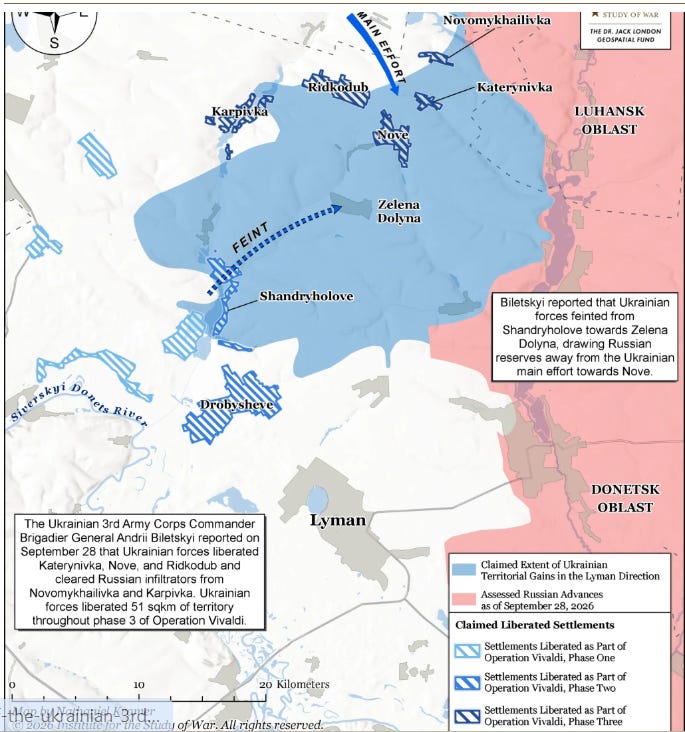
The Ukrainians are starting to figure it out. Four years into the war and experimentation pays off. These things take time to figure out, develop first in small units, and then scale to success as analyst Mike Kofman recently pointed out on WarTalk. The Ukrainians successfully integrated UAS and CUAS operations, electronic warfare, deception, artillery, and mechanized formations into a successful assault into occupired Russian territory. (see map above). As a planner or commander, you still have to think through the same processes you always have, just now with drones on both sides. How do I set conditions? How do I minimize my exposure to enemy reconnaissance and fires? How do I secure my breach lanes? How do I ensure I’m about to recon and screen and punch the enemy before they can punch me? Sure the enemy has drones, but so do you. So how do you employ them to ensure those things in support of your objectives. The little drones aren’t getting you through the breach when hell is raining down on your engineers, so you need armor. How do you protect that armor? Well, focus on what makes those threats weak? Datalinks, electronic emissions, and range. Go hunting. Suppress the enemy. Give your forces the maneuver space to achieve victory.
And so, it’s the same as it ever was. Technology alone does not win or lose wars. It is the integration, adaptation, and application of that technology that provides commanders with the capabilities to bring the fight to the enemy. We still need armor to help close with and destroy the enemy. And if you as a commander decide to write off the tank in a ground war against a peer because you thought it was once invincible, then it’s not technology losing you the war, it’s just you.
Thanks for reading! If you would like to read more about the future of war and technology, check out my novel, EX SUPRA. It’s all about the world after the fall of Taiwan, an isolationist and hyper-partisan America, and World War III. It was nominated for a Prometheus Award for best science fiction novel and there’s a sequel in the works! Don’t forget to share and subscribe!